
How AI Improves Decision Quality in Banking, Financial Services, and Insurance

In banking, financial services, and insurance, AI creates lasting value when it improves decisions, not just speed.
Across banking, financial services, and insurance, the push to scale AI is strong. Many programmes improve speed, reduce manual effort, and streamline workflows. Those gains are useful, but they are only the first layer of value. The bigger opportunity is to improve the quality and range of choices available to decision-makers.
That is where a choice-led decision model matters. Instead of using AI only to automate actions, organisations can use it to surface stronger alternatives, clarify trade-offs, and help teams respond to risk with more precision. In practice, that means building decision environments where predictive insight and generative capabilities make human judgment more informed and more effective.
Why Decision Quality Matters More Than Automation
In BFSI, decision quality is not a soft metric. Every lending decision, claims outcome, fraud escalation, or compliance action can affect cost, trust, and regulatory exposure. That is why the strength of the available choices matters as much as the process used to select among them.
When teams work from limited or poorly structured options, even disciplined decision-making can produce weak outcomes. Traditional systems often present fixed workflows and narrow paths. A more intelligent decision environment does the opposite: it expands relevant options using live signals, business rules, customer context, and risk conditions, then presents them in a way that supports faster and clearer judgment.
For Tarento’s BFSI clients, this distinction has direct commercial value. Better decision quality can improve outcomes across underwriting, fraud detection, customer onboarding, and claims management, four areas where risk, cost, and operational complexity are consistently high.
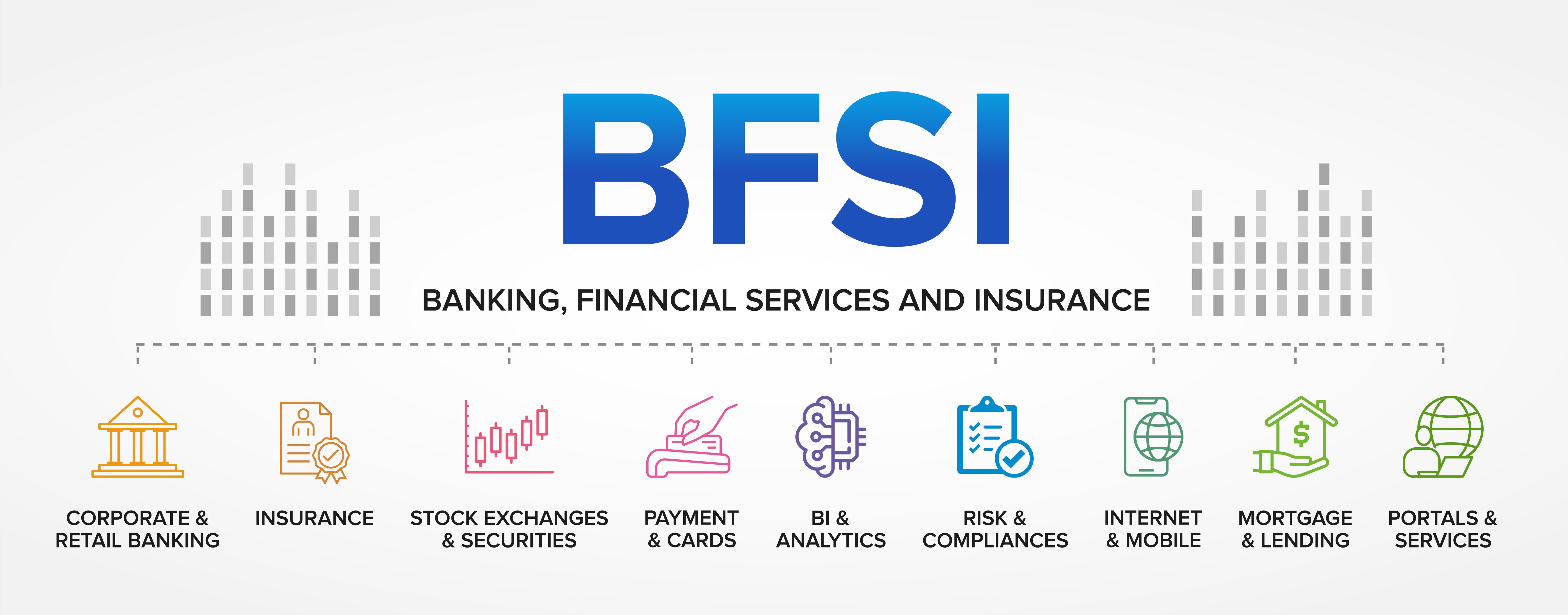
4 AI Capabilities That Improve Decision Making in Banking, Financial Services, and Insurance
This approach is not a single tool or model. It is an architectural pattern for improving how decisions are made. Its value comes from combining data, intelligence, and workflow design in a way that helps people see better options, understand likely consequences, and act with less friction.
Expanding choice sets — Decision Intelligence surface options that standard workflows would never present because they were not anticipated at design time. In credit risk assessment, for example, this could mean generating alternative loan structures using a wider set of relevant data signals.
Predictive foresight — AI-Powered Decisioning does not just show what options are available now. They also help decision-makers understand the likely downstream effects of each option. A claims adjuster, for example, can evaluate a settlement decision alongside projected dispute risk, reserve impact, and customer retention signals.
Continuous learning — Decision Intelligence improves over time. Each decision and its outcome feed back into the system, helping future choice sets become more relevant and useful. This allows the decision environment itself to improve as business conditions evolve.
Cognitive load reduction — BFSI teams often work under information overload. Risk dashboards, compliance reports, customer histories, and market signals all compete for attention. AI Decision Intelligence filters and prioritizes what matters most, so decision-makers see the right signals at the right time.
Step-by-Step: How Tarento Builds AI Decision Environments in BFSI Engagements
1. Define the decision, not the process. Tarento starts by identifying the decisions that most directly affect financial outcomes. In insurance, this is often claims adjudication. In banking, it may be credit origination or fraud escalation.
**2. Audit the current choice environment. Before designing any AI layer, Tarento maps the options decision-makers can currently access, where those options come from, and what limits them. This often reveals that teams are working with far fewer choices than the available data could support.
3. Build the data foundation. Decision Augmentation depends on data that is not only accessible but structured for decision-time use. Tarento helps clients modernise legacy systems, strengthen master data management, and connect customer, risk, compliance, and operational data into a unified decision-ready layer.
**4. Design and pilot the Decision Intelligence with a contained use case. Instead of starting enterprise-wide, Tarento begins with one high-stakes decision area, such as claims intake, fraud escalation, or credit approval. The goal is simple: prove that better options lead to better outcomes.
5. Instrument choice-outcome capture. For every supported decision, three questions should be recorded: What options were considered? Which option was chosen and why? What measurable outcome followed? This creates a feedback loop that improves the AI Decision Environments and supports governance and auditability.
6. Measure decision quality, not just system activity. Successful AI Decision Intelligence programmes should track whether the decision environment is actually improving. Useful indicators include better option breadth, faster time to decision, lower dispute rates, reduced error rates, improved risk alignment, and stronger user adoption among operational teams.
7. Scale with trust as the organising principle. Expansion should follow a staged model, starting with internal use cases before broader customer-facing deployment. Trust is not something added after the build. It should shape how Decision Intelligence is trained, monitored, explained, and governed from the start.

Best Practices for AI Decision Making
To make AI Decision Intelligence work in BFSI, teams need more than strong models. They need the right starting point, the right controls, and the right success measures.
-
Begin with one high-stakes use case. A focused starting point helps prove value, validate governance, and build internal confidence before scaling further.
-
Use AI to augment judgment, not replace it. The biggest value comes when Decision Intelligence helps experts make better calls in complex situations.
-
Measure real-world impact. Better choice quality should show up in faster decisions, fewer disputes, smoother workflows, and stronger user trust.
-
Do not scale before trust is proven. Governance, monitoring, and business confidence should be established in smaller rollouts first.
-
Do not mistake model performance for business success. Even a technically strong model fails if teams do not trust it, use it, or benefit from it.
The Next AI Advantage in Banking, Financial Services, and Insurance
For BFSI organisations, the next frontier of AI is not who automates fastest. It is who makes better decisions, more consistently, at scale. Decision Intelligence shifts AI’s value from process efficiency to decision quality.
In practice, that means giving teams better options, clearer context, and stronger confidence at the moment of action. It also means reducing cognitive overload, improving governance, and making AI useful where human judgment matters most.
FAQ: AI Decision Making in Banking, Financial Services, and Insurance
-
What is an AI Decision Intelligence in BFSI?
It is an AI-enabled decision framework that helps BFSI teams work with better, more relevant options. It improves decision quality, not just workflow speed.
-
How is an AI Decision Intelligence different from standard workflow automation?
Traditional automation focuses on efficiency. An AI Decision Intelligence focuses on decision quality by helping teams evaluate stronger options and likely outcomes.
-
Where do Decision Augmentations create the most value in BFSI?
They are especially useful in credit decisions, fraud detection, claims adjudication, customer onboarding, and compliance operations.
-
Why do AI Decision Intelligence matter for enterprise AI adoption?
AI gets adopted faster when it helps people make better decisions, not just complete tasks faster. They make AI useful in real decision environments.
-
Can AI Decision Intelligence replace human decision-makers?
No. They are designed to augment human judgment, not replace it.
-
What data foundation is needed for an AI Decision Intelligence?
AI Decision Intelligence need connected, decision-ready data across customer, operational, risk, and compliance domains.
-
How should BFSI firms start with AI Decision Environments?
Start with one high-stakes, measurable decision area. Pilot the Decision Environment, capture outcomes, validate governance, then scale in phases.
-
How do you measure AI Decision Intelligence success?
Measure decision quality, speed, option breadth, dispute reduction, risk outcomes, regulatory defensibility, and user adoption.
-
Why is governance critical in such deployments?
Because BFSI decisions are regulated. AI-supported decisions must be explainable, auditable, and aligned with internal controls.
At Tarento, we work with BFSI organisations to move beyond workflow digitisation and toward better decision environments. The focus is not only on making processes faster, but on helping teams make more informed, relevant, and defensible decisions. Learn how this works in a real client engagement →


5 Engineering Principles That Separate Systems That Scale From Systems That Fail