

20 February 2026
At the India AI Impact Summit 2026, the Prime Minister drew a line in the sand. We were there — and we have been building the infrastructure that makes India’s AI ambition real.
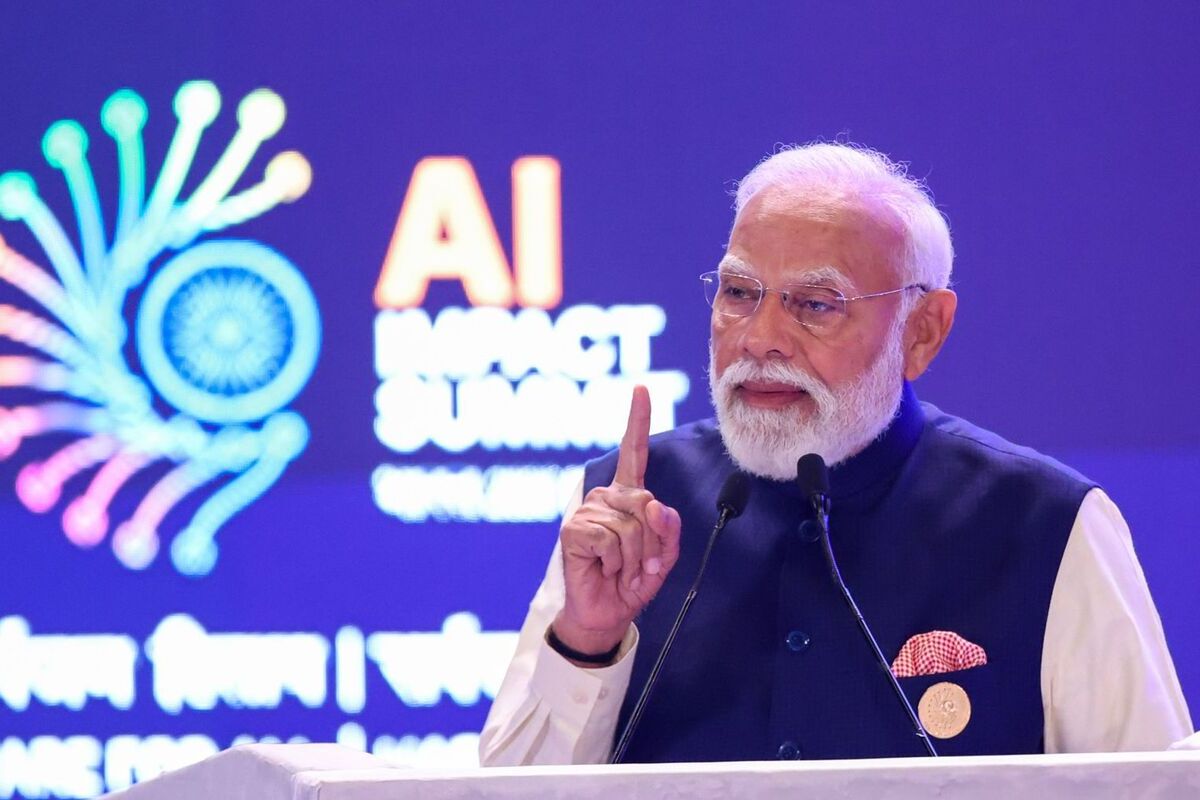
“Today, the world stands divided. There are two kinds of people. One sees fear in AI. They see a threat in AI. And that is all they talk about. And the second sees opportunity. I say this with responsibility. I say this with pride. We do not see fear. India sees destiny in AI. India sees a future in AI.” — Prime Minister Narendra Modi, India AI Impact Summit 2026
When the Prime Minister speaks of Bhagya (destiny) and Bhavishya (future), not Bhay (fear), he is not speaking abstractly. He is describing a national posture years in the making — built brick by brick through platforms, datasets, and digital public infrastructure that most people will never see, but millions already depend on.
Tarento has been one of those builders.
A Summit That Signaled a Shift — From Experimentation to Execution
The India AI Impact Summit 2026, held at Bharat Mandapam in New Delhi, was not a conference about what AI could do. It was a demonstration of what AI is already doing — at national scale, in Indian languages, for Indian citizens.
Google CEO Sundar Pichai reflected on his journey from Chennai to IIT Kharagpur and spoke about India’s accelerating AI momentum. Google has committed $15 billion toward AI and digital infrastructure in India. His message was direct: AI must reach every section of society — not just enterprises or urban centers.
The macro signals are clear:
- AI is projected to contribute $450–500 billion to India’s GDP by 2030
- Over 20% of the world’s data is generated in India
- The IndiaAI Mission has committed ₹10,000+ crore to build a 34,000+ GPU compute network
India is not waiting to participate in the global AI narrative. It is shaping it.
For Tarento, the Summit was not just a moment to observe. Our collaborators and ecosystem partners — including BHASHINI, COSS, Sarvam AI, EkStep Foundation, Mission Karmayogi, and AI4Inclusion — were present as active participants. This reflects the depth of our role in India’s AI public infrastructure ecosystem.
The Invisible Foundation: What Made India’s AI Possible
Behind every live AI demonstration at the Summit — real-time translation, intelligent assistants, multilingual voice systems — lies a foundation of open datasets, standardized APIs, and production-grade digital architecture.
That foundation did not emerge overnight.
India’s Digital Public Infrastructure (DPI) — Aadhaar, UPI, and the Account Aggregator framework — created a structured, consented, interoperable data layer at population scale. AI in India is not being built on fragmented silos; it is being built on interoperable public rails.
The next layer on top of DPI is the language layer.
This is where Tarento’s work as the technology development partner for Mission BHASHINI becomes central to India’s AI strategy.
Mission BHASHINI: Language as National AI Infrastructure
BHASHINI — India’s National Language Technology Mission under MeitY — is an open platform enabling AI-powered communication across India’s 22 official languages.
At the Summit, Amitabh Nag, CEO of the Digital India BHASHINI Division, articulated the mission clearly: Indian languages must be first-class citizens in the AI ecosystem. Every Indian must be able to access digital services in their mother tongue — via text, speech, or conversation.
VoicERA: Multilingual Voice AI at Scale
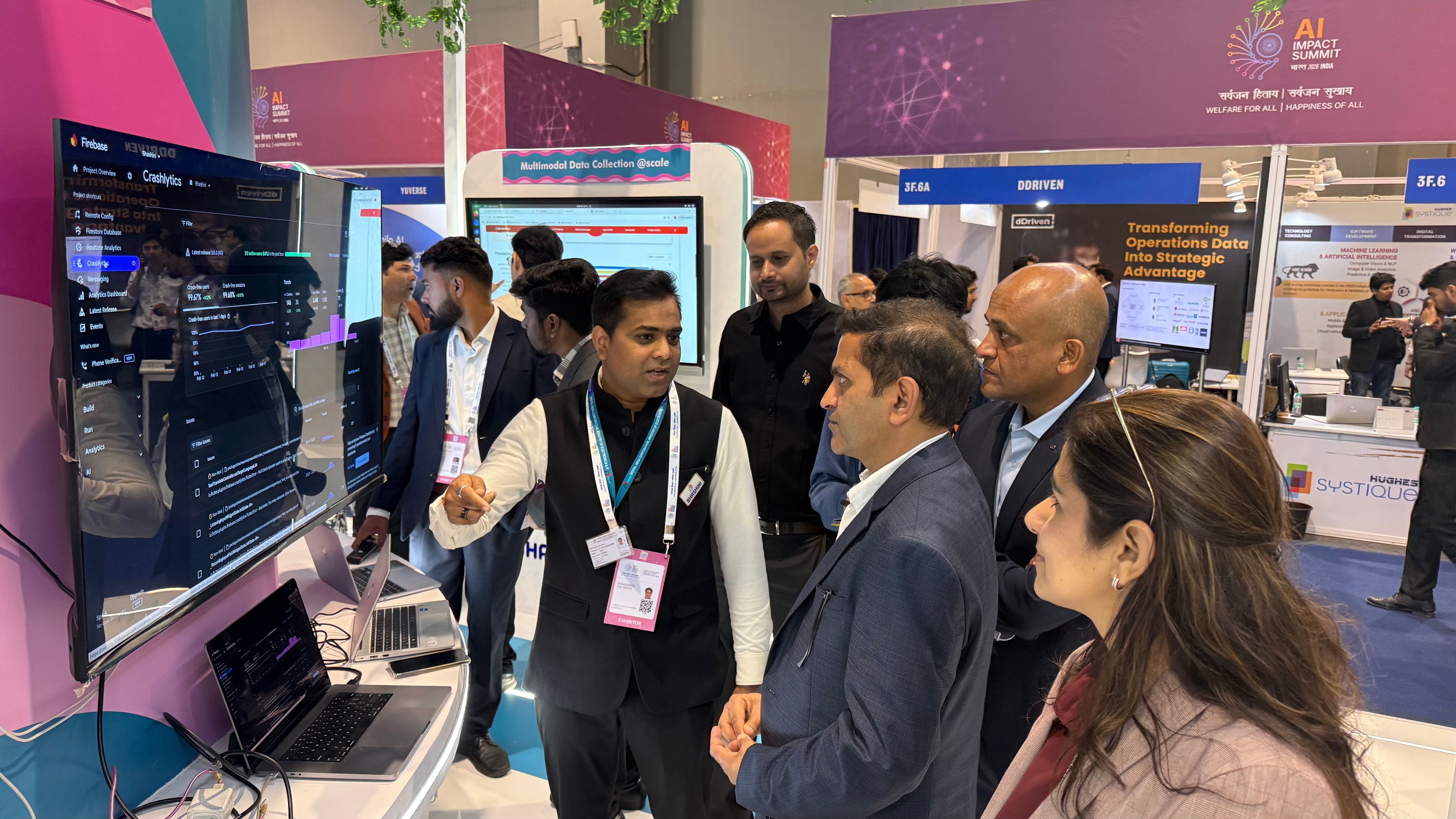
A key milestone at the Summit was the launch of VoicERA, an open-source multilingual voice AI stack built on BHASHINI’s National Language Infrastructure.
VoicERA extends BHASHINI beyond translation into:
- Real-time speech systems
- Conversational AI
- Multilingual telephony
- Citizen service automation
- Education and agriculture advisory systems
It is designed to be open, modular, interoperable, cloud-deployable, and on-premise ready — eliminating duplication and vendor lock-in across the ecosystem.
The launch was led by the Digital India BHASHINI Division in partnership with EkStep Foundation, COSS (Centre for Open Societal Systems), IIIT Bengaluru, and AI4Bharat. It signals how India’s AI public infrastructure is being built: through an interlocking, open ecosystem aligned toward a shared national foundation.
ULCA: The Language Data Backbone
As BHASHINI’s technology development partner, Tarento built ULCA (Universal Language Contribution API) — the backbone data platform hosting one of the largest open repositories of Indic language datasets and models.
ULCA includes:
- 215 million parallel corpus pairs
- 9,800 hours of speech data
- 155 translation models across Indian language combinations
When AI systems speak Hindi, Tamil, Bengali, Telugu, or Marathi, they often rely on this foundation.
For investors and enterprise leaders, this is the structural layer that enables scalable, sovereign, multilingual AI adoption across government and industry.
COSS: Extending India’s DPI Model to the Global South
The Centre for Open Societal Systems (COSS), a joint initiative of EkStep Foundation and IIIT Bangalore chaired by Nandan Nilekani, is focused on helping countries build Digital Public Infrastructure and adopt Digital Public Goods at scale.
COSS engagements span Brazil, Morocco, Papua New Guinea, and South Africa, with a mission to improve one billion lives globally by 2030 through open digital systems.
As an AI partner in BHASHINI 2.0, COSS brings strategic and policy depth, while Tarento delivers technology execution. Together, this creates a replicable model for extending India’s sovereign language AI infrastructure across the Global South.
This is DPI-as-export. And AI is the next layer.
AI4Inclusion: Sovereign Language AI for India and Beyond
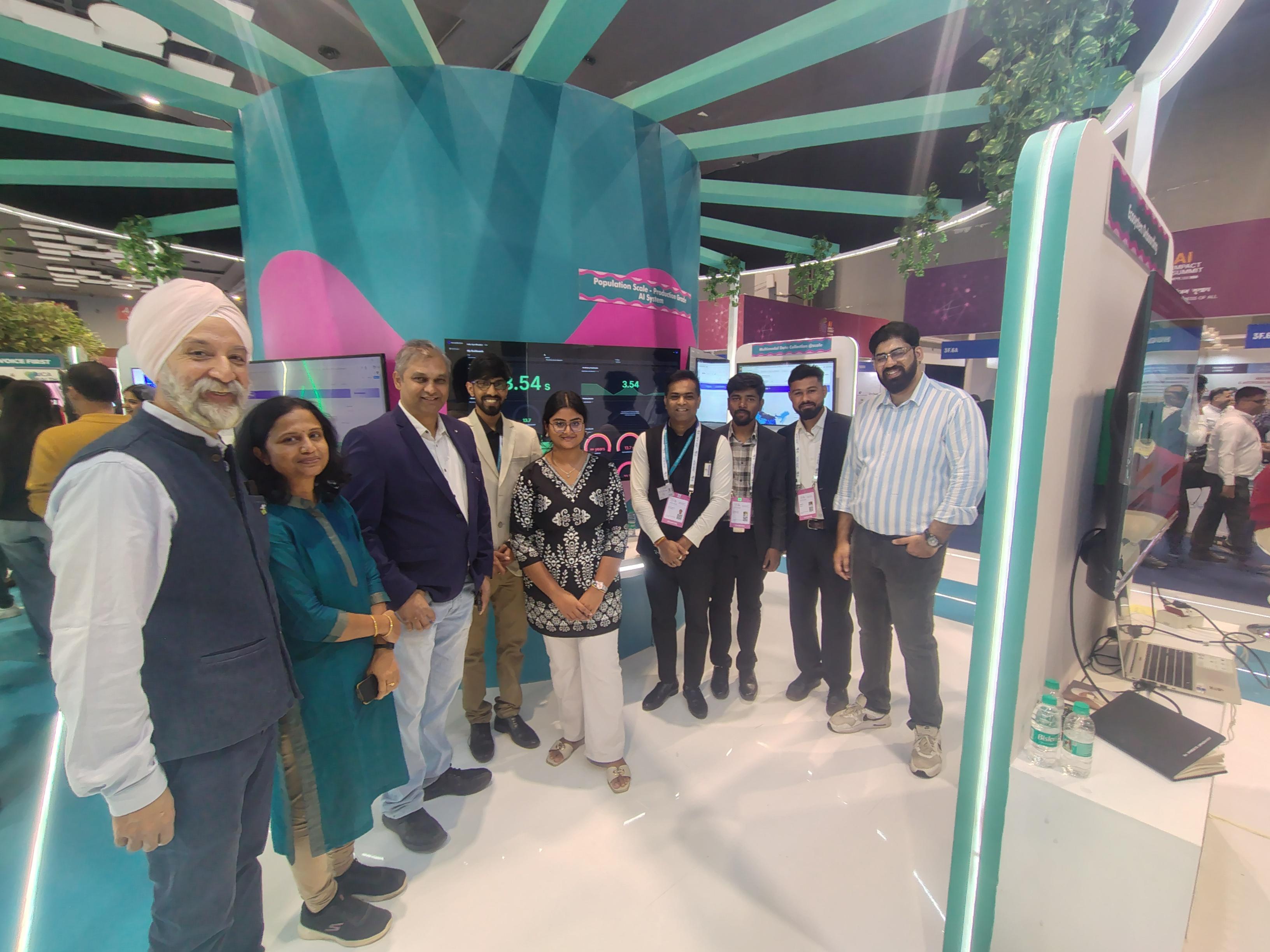
AI4Inclusion (AI4I), also present at the Summit, is focused on building sovereign Language AI Digital Public Infrastructure for India and the Global South — with Tarento actively contributing to its development.
AI4I’s mission is not simply translation. It is to build foundational language AI trained on Indian and Global South contexts, governed as digital public goods, and architected for sovereignty rather than dependence on foreign models.
This aligns with India’s infrastructure philosophy: build, own, scale.
For C-suite leaders, this represents a shift from AI consumption to AI capability creation — reducing strategic dependency while enabling inclusive growth.
Sarvam AI: Sovereign Models at Scale
The Summit also highlighted the rise of India-built foundational models.
Sarvam AI launched:
- A 30B parameter model optimized for real-time conversational AI
- A 105B parameter model with a 128K token context window and mixture-of-experts architecture
Both support 22 Indian languages and multimodal capabilities across text, vision, and speech.
As Pratyush Kumar, Co-Founder and CEO of Sarvam AI, stated: “Today we show we can bring our own AI to a billion Indians.”
The message is clear: sovereign compute, sovereign language data, sovereign models.
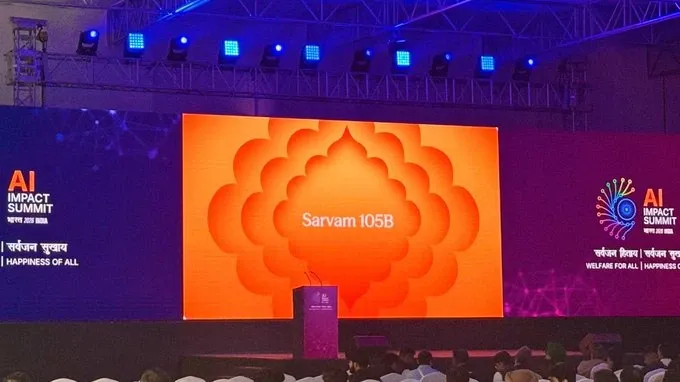
Mission Karmayogi 2.0: AI in Production at National Scale
Mission Karmayogi demonstrated how AI is being embedded into governance through the iGOT Karmayogi platform.
These systems are live.
- AI Sarthi personalizes learning paths
- AI Tutor provides contextual explanations
- AI-Driven Capacity Building Plan automates skill mapping and course recommendations
We have has been the technology partner behind iGOT Karmayogi since 2021 — engineering digital infrastructure that now serves:
- 7.5 million civil servants
- 2,000+ courses
- 22+ Indian languages
- 800+ districts
This is not AI experimentation. It is AI at production scale within government systems.
The Bigger Picture: Secure, Sovereign, Scalable AI
The Summit underscored a strategic reality: AI growth must align with data security, sovereignty, and compliance under India’s Digital Personal Data Protection (DPDP) Act.
Key questions are being addressed structurally:
- Domestic compute via the IndiaAI Mission
- Open language infrastructure via BHASHINI and ULCA
- Indigenous models via Sarvam AI and AI4Bharat
- Global DPI scaling via COSS and AI4Inclusion
The objective is not simply AI adoption. It is AI sovereignty.
For enterprises across BFSI, manufacturing, healthcare, retail, and MSMEs, AI is moving from pilots to production. For 800 million internet users, AI is already embedded in search, regional access, fraud detection, and conversational services.
India’s DPI gave the world a blueprint for digital inclusion. Its AI layer is now extending that blueprint into the intelligence era.
What Comes Next
The Prime Minister’s words at the India AI Impact Summit 2026 were a declaration of direction.
Declarations become real through engineering.
Across BHASHINI, ULCA, iGOT Karmayogi, and AI4Inclusion — Tarento is building the infrastructure that powers India’s AI public stack.
Tarento is a trusted GovTech partner at the forefront of India’s AI Public Infrastructure. As a technology development partner, we collaborate with enterprise and government institutions to build scalable, secure, an IT enabled business that operate at international scale.
Explore our portfolio to learn more about our work across India and global markets.
Learn more about BHASHINI | Aadhar | Ekstep | Tarento AI
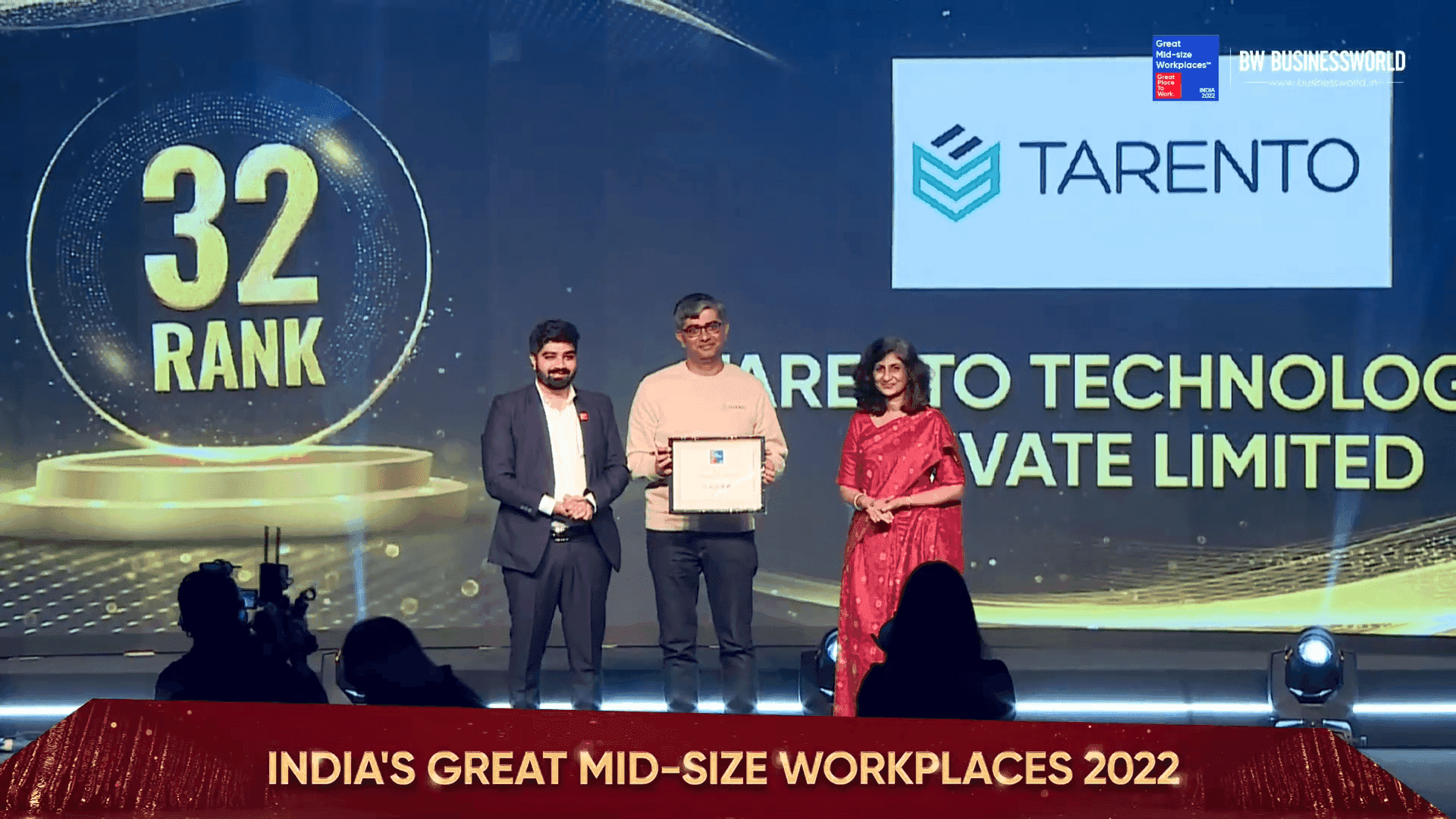
Tarento Ranks 32 at Great Mid-Size Workplaces in India!

