Engineering a National-Scale Learning Platform-iGOT Karmayogi for India
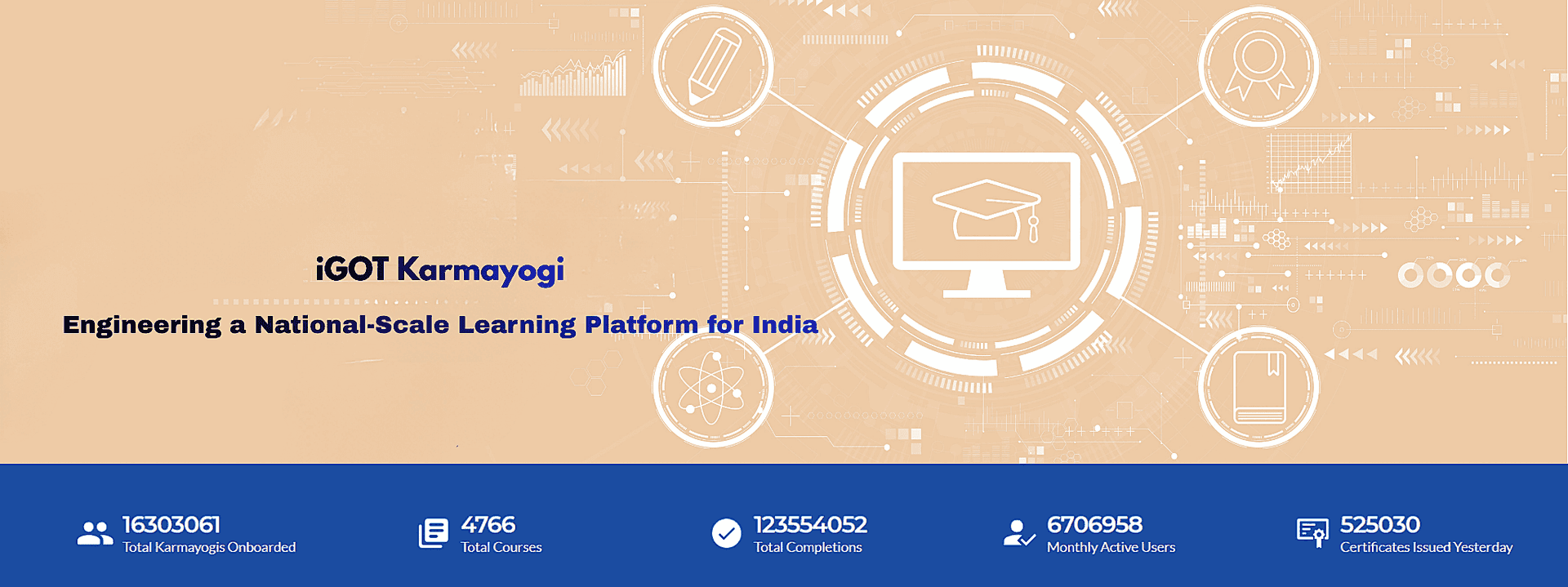
Built under Mission Karmayogi, iGOT Karmayogi is India’s national digital learning platform for civil servants. It supports competency-based learning, multi-stakeholder reporting, mobile-first access, and data-driven decision-making at scale.
Tarento has contributed as a technology development partner to key parts of iGOT Karmayogi, supporting platform engineering, scale, and operational readiness since 2021.
Client and context
iGOT Karmayogi is designed to strengthen civil service capacity building through a role- and competency-based learning model. The platform goes far beyond course delivery. It brings together learning, analytics, competency mapping, AI-assisted workflows, collaboration, and stakeholder reporting in a single ecosystem.
For Tarento, this was not a conventional enterprise platform. It was a large public digital system that had to perform reliably across departments, geographies, languages, devices, and connectivity conditions.
Business Challenge
The challenge was not just scale. It was a coordinated scale across multiple systems, stakeholders, and real-world usage environments.
- Role and competency definitions varied across ministries, departments, and organisations. That created complexity in standardising learning journeys and reporting models.
- Different stakeholders needed different views of the same platform. Reporting had to serve programme leadership, ministries and departments, competency bodies, course providers, and individual officers without fragmenting the underlying data model.
- The platform also had to support diverse learning behaviours, from short-format mobile learning to structured progress tracking, while remaining usable in low-connectivity environments.
- At the same time, AI features such as moderation, tagging, and digital assistance had to be useful, safe, and operationally reliable in a high-trust public-sector setting.
- Finally, the SĀDHANA Saptah 2026, National Learning Week, raised the bar for production readiness. The platform had to remain stable under sharp demand spikes, with no room for service disruption. The platform recorded more than 3.18 crore course completions during this week.

Objectives & Success Criteria
1. Multi-layer dashboards Tarento helped build and evolve a reporting system that served multiple stakeholder groups through purpose-built dashboards, including PM, SPV, CBC, CBP provider, MDO, and Officer views. This gave decision-makers access to the same platform through different operational lenses, from programme oversight to department performance to individual learning progress.
2. FRAC-based competency workflows Our team supported the implementation of FRAC — the Framework of Roles, Activities, and Competencies. This included structured workflows for extracting role information, consolidating inputs, reviewing competency data, and building a usable FRAC dictionary. That foundation helped connect learning more directly to job roles and capability requirements.
3. AI-enabled platform capabilities We also worked on AI-backed features that improved moderation, discoverability, and user experience. These included text and image profanity checks, India map validation, automated tag generation, and the Vega digital assistant. Together, these features helped improve platform safety, content discoverability, and ease of access.
4. Telemetry-led data platform A strong telemetry and analytics layer powered the platform’s reporting and observability model. Learning events flowed through streaming pipelines into dashboards, reports, and data products that supported real-time visibility and operational insight. This was critical not only for reporting, but also for diagnosing system behaviour, understanding usage patterns, and preparing for peak events.
5. Open-source, modular architecture The platform was built on an open-source, microservices-first architecture designed for resilience, interoperability, portability, and continuous evolution. Its modular subsystem design allowed different components to evolve independently while still working together as one platform.
Results & Impact
Quantitative outcomes
| Metric | Result |
|---|---|
| Peak throughput | 64,000 TPS |
| Nodes provisioned | 141 |
| CPU utilisation at peak | 27% |
| Memory utilisation at peak | 13% |
| Platform failures during NLW | Zero |
Qualitative outcomes
- Competency-led workflows through FRAC
- Multi-layer stakeholder dashboards
- Real-time telemetry and analytics
- AI-enabled moderation and assistance
- Mobile-first learning support
- Open-source, modular platform architecture
What’s Next
Large public digital platforms cannot rely on traffic handling alone. They need strong architecture, observability, role-based workflows, differentiated reporting, and disciplined operations.
Tarento’s contribution was not about building a single feature or deploying a single service. It was about helping key parts of a national-scale learning platform perform reliably, scale responsibly, and stay production-ready under real demand.
Ready to Build for National-Scale?
If you’re building GovTech platforms, digital public infrastructure, or large-scale learning systems that need to perform reliably under real-world demand, Tarento can help you bring together product engineering, platform architecture, and operational readiness.
- Talk to Our Experts
- Send a message to hello@tarento.com to discuss your platform engineering or readiness requirements.
Multi-layer dashboards, competency workflows, AI capabilities, and zero-failure performance under peak demand
By submitting this form, you agree to Tarento processing your data as described in our Privacy Policy.


Connected Vehicle Platform for Electric Two-Wheelers: How a Leading OEM Built for Scale