
Five Enterprise Cloud Infrastructure Foundations That Define Reliability
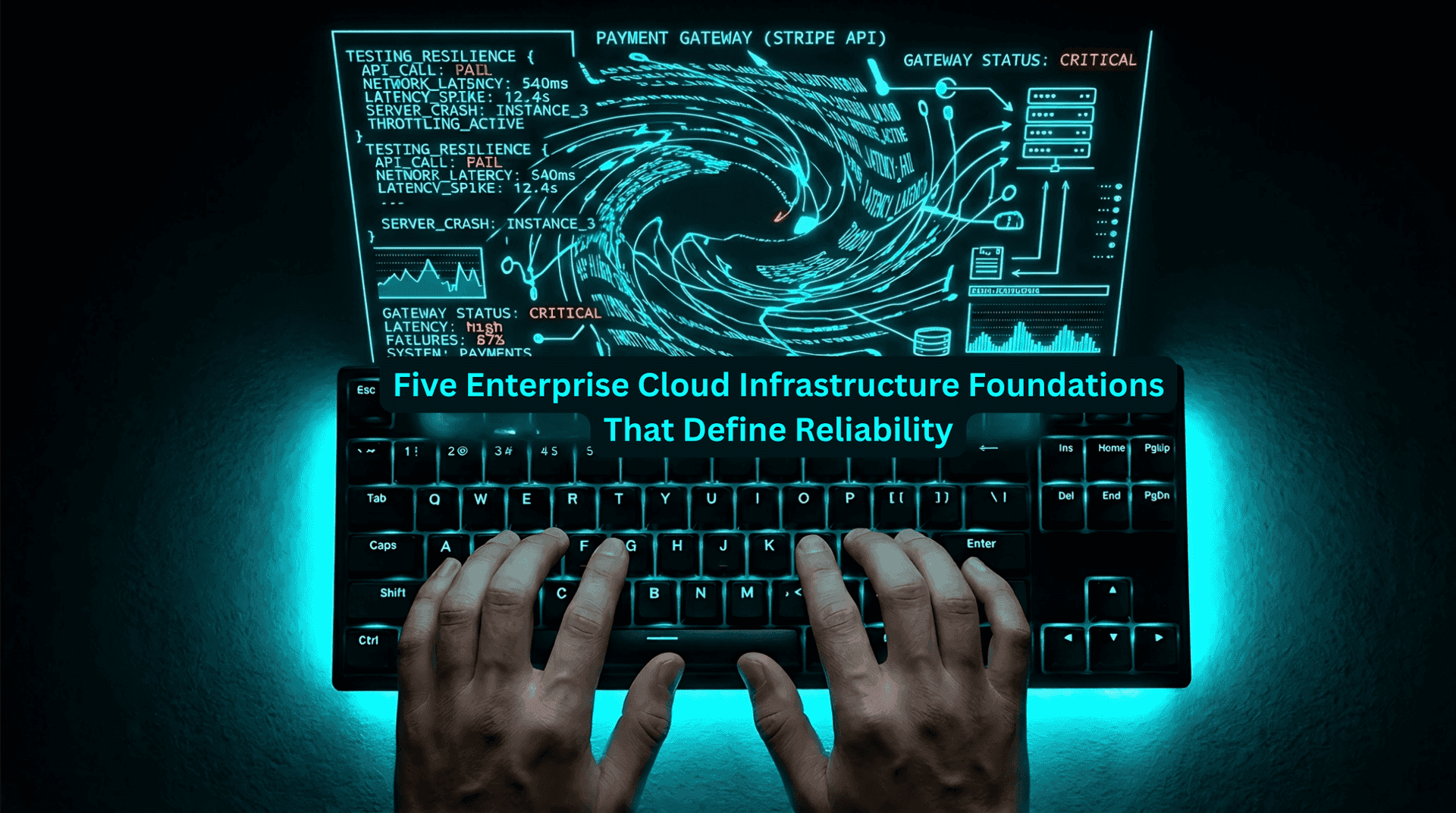
Stolen or misused credentials remain the single most common way attackers get into a system, and 88% of basic web application attacks involve them. Meanwhile, the median time to identify and contain a breach involving compromised credentials is close to 300 days. In distributed systems, the gap between "looks resilient" and "is resilient" is rarely visible until something fails. By then, the cost of not having designed for it is already spent.
The hardest infrastructure decisions rarely look like infrastructure decisions. They look like a gateway added in a hurry, a dashboard nobody fully trusts, a resilience test nobody had time to run, a Terraform module nobody reviewed properly, or an internal network everyone assumed was safe because it was internal. Individually, each shortcut is defensible. Together, they define whether a platform holds up under real-world pressure or quietly accumulates the kind of debt that surfaces at the worst possible moment.
That is why infrastructure and cloud foundations belong on the same table as product strategy, not underneath it. How requests enter a system, how failure is observed, how resilience is tested, how environments are provisioned, and how trust is verified between services: these five decisions compound. This guide sets out what mature engineering teams get right on each one, and what typically goes wrong when they don't.
5 Infrastructure Foundations That Define Reliability, Security, and Speed
- A good API Gateway centralises cross-cutting concerns (authentication, rate limiting, routing) so services stay focused on business logic, not repeated boilerplate.
- Observability is three distinct signals, not one. Metrics detect, traces localise, logs explain; confusing them is why incidents drag on.
- Chaos Engineering replaces hope with evidence by testing failure on purpose, in controlled conditions, before production does it without asking.
- Infrastructure as Code is a design choice, not a checkbox. Declarative and imperative approaches solve different problems, and most platforms need both.
- Zero Trust Networking treats network location as meaningless. Every request proves identity and intent, which is what limits blast radius when, not if, something is compromised.
1. What Makes a Good API Gateway
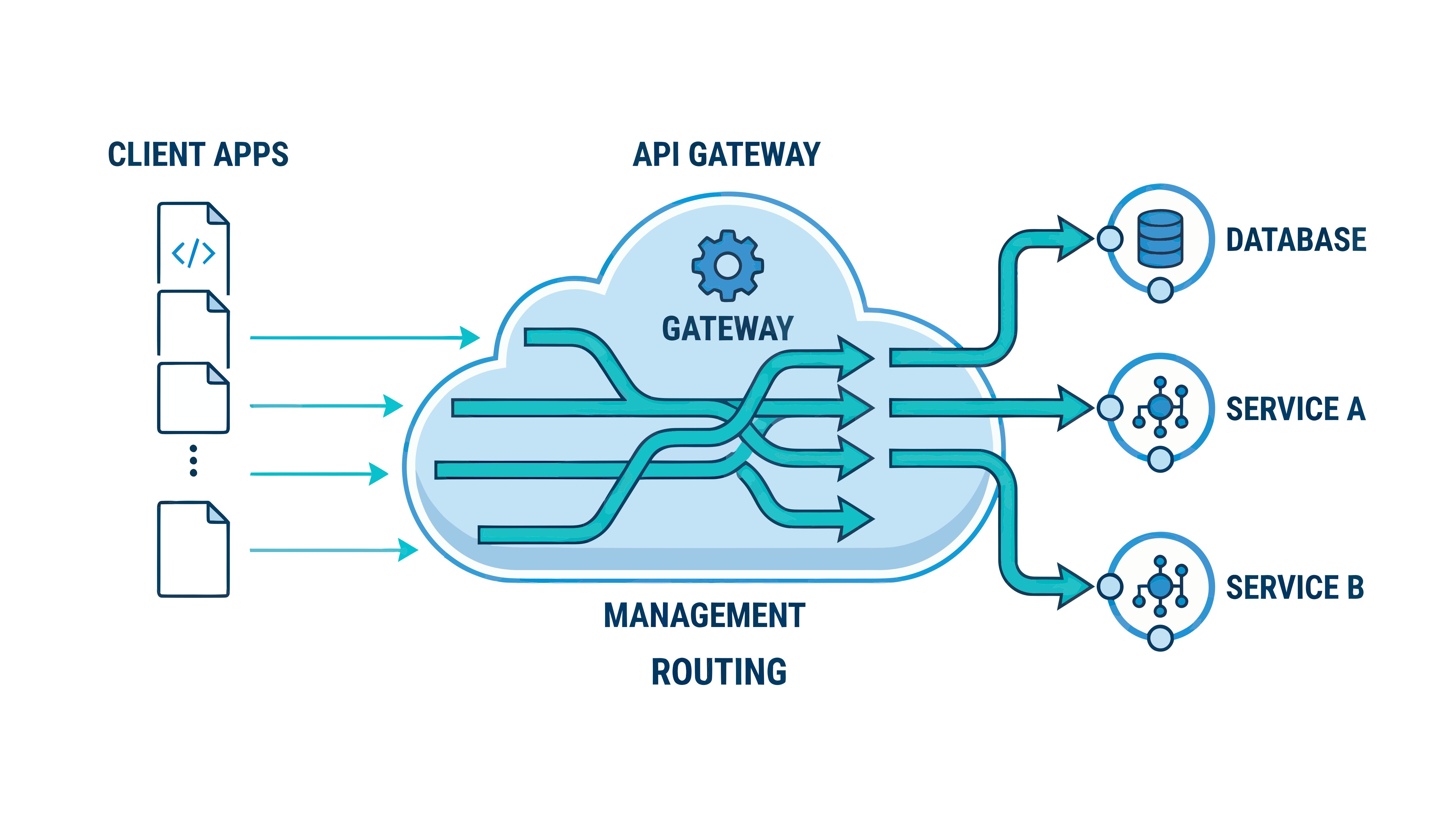
As systems grow from a handful of services to dozens, the way clients talk to the backend becomes just as important as the backend itself. An API Gateway quietly decides whether an architecture feels coherent or painful. To some teams it's 'just a reverse proxy'. To mature teams, it's a deliberately designed boundary that protects internal systems, simplifies clients, and absorbs change without every consumer noticing.
Why This Matters for the Business
Without a well-designed gateway, complexity leaks outward. Clients know too much about internal services, security rules get duplicated across teams and drift out of sync, and rate limiting becomes inconsistent, applied wherever someone last remembered to add it. Observability fragments too, with no single view of what's actually happening. Individually, none of these look urgent, but each one is a small exception that compounds into systemic fragility over time.
Key question: If a client is calling your services directly today, how many places would a single security rule need to change?
What a Good Gateway Actually Gets Right
A good API Gateway does a small number of things exceptionally well, and resists the temptation to do more.
Clear responsibility. It owns cross-cutting concerns: authentication, authorisation, rate limiting, request validation, routing, retries, and light transformation. Business logic has no place here. Once business rules creep into the gateway, ownership and debugging both become unclear.
Client simplicity. Clients talk to one consistent interface. The gateway can aggregate responses, version APIs, and absorb internal service churn, so services can split, merge, or evolve without breaking anything upstream.
Security by default. Authentication is enforced uniformly, TLS is terminated centrally, and inputs are validated early. Security shouldn't depend on every individual service remembering to do the right thing: that's a single point of failure disguised as diligence.
Operational visibility. Metrics, logs, and traces captured at the gateway give a system-wide view of latency, error rates, and traffic patterns, which is what makes incidents genuinely diagnosable rather than a guessing exercise.
Performance and resilience. A good gateway adds minimal latency, supports backpressure, and fails gracefully, protecting downstream systems rather than amplifying whatever is already going wrong.
When Skipping the Gateway Becomes an Incident
A team once let each frontend call multiple backend services directly 'for speed', with no gateway and no central rate limiting. During a marketing campaign, traffic spiked, a poorly cached endpoint flooded a critical service, and thread exhaustion followed. Authentication logic differed slightly across services, so the rushed fixes introduced fresh security gaps. Rollback was slow because clients were tightly coupled to internal APIs that had never been designed to be stable. A gateway with rate limiting and a stable external contract would have contained the blast radius. Instead, a local optimisation became a company-wide incident.
A good API Gateway is a boundary, not a product feature. Done well, it reduces cognitive load, tightens security, and buys teams the freedom to change internal systems with confidence. Skipped or done poorly, it becomes technical debt that compounds interest.
For teams building this discipline into their platform, this is exactly where Enterprise Integration and Product & Platform Engineering work together: designing the boundary once, properly, rather than retrofitting it after the first serious incident.
2. Observability: Logs vs. Metrics vs. Traces
Your system is 'working', until it isn't. A checkout page slows, a queue consumer lags, a cron job stops silently, or latency spikes for one region only. Everyone asks the same question: what changed? If the only available tool is grepping logs, hours get burned and the room still ends up arguing in circles. Observability is the difference between guessing and knowing, and it rests on three distinct signals that get conflated far too often.
Why This Matters for the Business
For engineering leaders, the job isn't only fixing bugs: it's reducing mean time to detect and mean time to recover for the whole organisation. Poor observability produces 'incident theatre': war rooms, blame, and rollbacks chosen by instinct rather than evidence. Good observability produces fast, boring recoveries instead. It also has a direct cost dimension: storing everything as logs is expensive, sampling traces carelessly can hide the truth, and over-aggregated metrics can smooth over exactly the sharp edge that mattered. The goal is designing signals so an on-call engineer can answer three questions within minutes, not hours: is it broken, where is it broken, why is it broken.
Key question: The next time p95 latency spikes but error rate stays flat, which of your three signals would actually tell you why?
What Each Signal Actually Answers
Metrics: 'what is happening?' Numbers over time: request rate, error rate, p95 latency, queue depth, CPU, database connections. Cheap to store, excellent for dashboards and alerts, and strong for detection. Weak, on their own, for diagnosis.
Logs: 'what happened here?' Discrete events with context: a stack trace, a validation failure, a retry, a business rule rejection. Flexible and deep, but noisy and expensive at scale. Relying on logs alone turns every incident into a search problem.
Traces: 'where did the time go?' A trace follows a single request across services (API, auth, catalogue, pricing, database, cache), broken into spans with timings and metadata. Traces connect cause and effect across distributed systems and are unmatched for microservices latency debugging, provided sampling, cardinality, and trace-ID propagation across async boundaries are properly managed.
The rule of thumb worth keeping on a whiteboard: metrics detect, traces localise, logs explain.
When Missing Traces Becomes a Three-Hour Outage
A team migrating checkout into microservices set alerts on CPU and error rate, and kept 'info logs everywhere'. One Friday, p95 latency jumped from 250ms to 4 seconds while error rate stayed normal and CPU looked fine. Logs showed nothing beyond 'request received' and 'response sent'. Three hours later, the cause turned out to be a downstream pricing call retrying on a subtle timeout, but the retries ran in a separate async worker and lost all correlation to the original request. Proper traces with context propagation would have surfaced the slow span and the retry storm immediately.
Observability isn't a dashboard collection. It's designing the right signals so production tells the truth quickly: metrics to know something's broken, traces to find where, logs to understand why. Most teams struggle not because they lack data, but because they've never connected it.
This is the discipline behind Tarento's Performance Engineering and AI-Driven Operations practices: building the correlation between signals in, rather than bolting it on after the third unexplained outage.

3. Understanding Chaos Engineering
Most production systems don't fail because one big thing breaks. They fail because a small weakness appears at the wrong time, in the wrong dependency, under the wrong load: a service times out, a queue slows, a cache node vanishes, a retry storm begins. A healthy-looking architecture becomes a business incident within minutes. Chaos Engineering is the discipline of testing these failure scenarios deliberately, before reality runs the experiment without asking permission.
Why This Matters for the Business
As systems grow, complexity grows faster than code size. Microservices, message brokers, caches, third-party APIs, multi-region deployments, and autoscaling all multiply the number of things that can fail in unpredictable combinations. The real risk isn't failure itself: it's hidden failure paths nobody has ever tested. Teams routinely validate features, performance, and the happy path, and skip controlled failure experiments entirely, which creates false confidence. Chaos Engineering surfaces weak assumptions early: missing timeouts, poor retries, absent circuit breakers, fragile fallbacks, so teams learn safely instead of learning during an outage.
Key question: If your primary payment dependency became 400ms slower for ten minutes tomorrow, do you know how your system would behave, or are you assuming?
What Chaos Engineering Actually Is
Chaos Engineering introduces controlled failure into a system to understand how it behaves under stress. The goal isn't breaking things for fun: it's building justified confidence that the system survives real-world turbulence.
It starts with a steady-state assumption: for example, 'users can place orders successfully, and response time stays under two seconds'. Once that baseline is defined, the team introduces a small, deliberate failure: shutting down an instance, adding latency between services, dropping packets, exhausting CPU, or making a dependency unavailable.
Then the team observes: does traffic fail over correctly? Do retries overload the downstream service? Does monitoring actually detect the issue? Does the user experience degrade gracefully or collapse outright?
Good Chaos Engineering is gradual, measurable, and safe. It starts in lower environments and moves into production only with guardrails, blast-radius control, and a clear rollback plan. It isn't a one-off exercise: it's a continuous resilience practice tied directly to architecture, observability, and incident learning.
When Untested Failure Paths Became a Payments Outage
A team running a high-traffic payments platform assumed resilience because they had multiple service replicas and Kubernetes auto-healing, but had never tested failure between services. A brief network latency spike between the checkout service and the payment gateway caused retries to pile up, which increased load on the gateway, triggered further timeouts, and eventually blocked order completion across regions. It wasn't a full outage; it was an untested recovery pattern. Controlled chaos experiments run earlier would have surfaced the need for better timeout policies, retry backoff, and circuit breakers before customers and revenue were affected.
Chaos Engineering isn't about creating risk. It's about discovering risk that already exists, in conditions you control instead of conditions an outage chooses for you. Resilient systems aren't the ones that never fail: they're the ones designed, tested, and observed to fail safely.
This is the exact discipline built into Tarento's Quality Assurance & Automation and Performance Engineering practices: proving resilience before a customer does it for you.
4. Infrastructure as Code: Declarative vs. Imperative
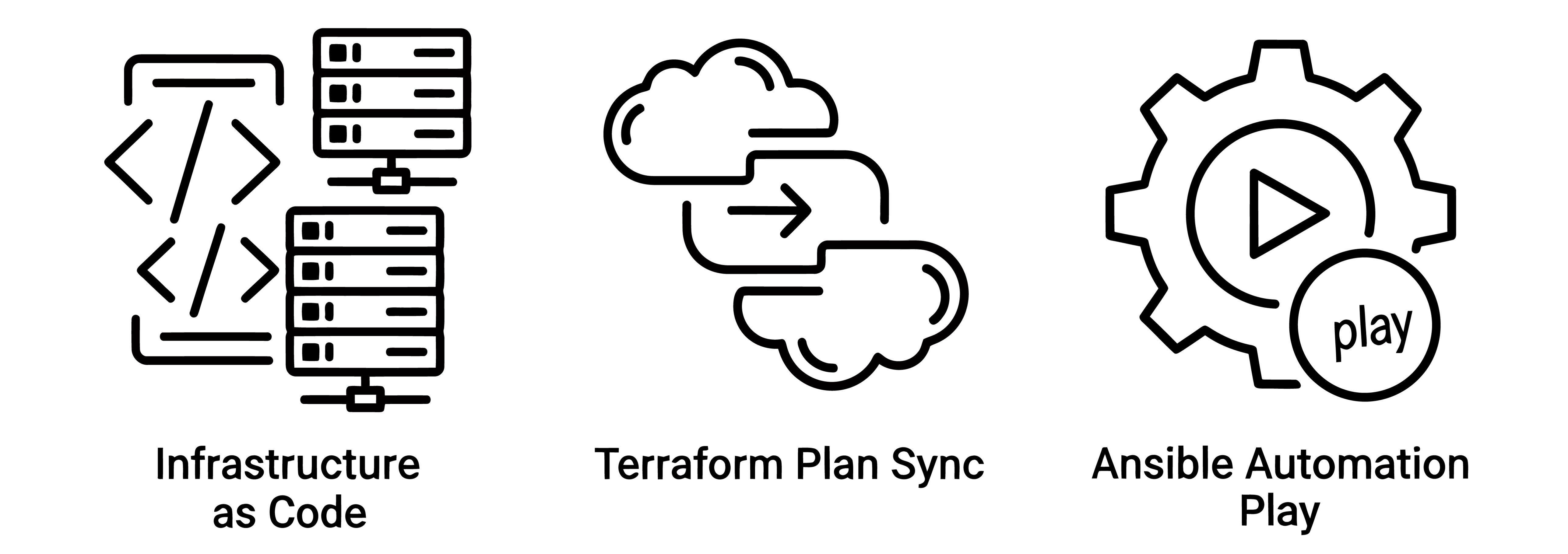
Most infrastructure failures don't start with a server going down. They start much earlier: a manual change, an undocumented command, a setup only one person truly understands. As systems grow, infrastructure can't remain a collection of scripts, tickets, and tribal knowledge. It has to be versioned, reviewed, repeatable, and predictable. Infrastructure as Code is the first-principles answer to that, but writing infrastructure as code isn't enough on its own. The real design decision is how that infrastructure gets expressed: declaratively or imperatively.
Why This Matters for the Business
Infrastructure is no longer someone else's concern. Application reliability, deployment speed, cost control, compliance, and disaster recovery are all tied directly to how infrastructure is provisioned and changed. Poorly managed infrastructure creates drift between environments, slows releases, and turns production recovery into a stressful, high-stakes exercise. Understanding the difference between declarative and imperative IaC shapes better decisions about automation, ownership, and long-term maintainability: this is a system design question, not just a DevOps one.
Key question: If your staging and production environments diverged today because of an undocumented manual change, how would you find out, and how long would it take?
Two Ways to Express the Same Infrastructure
Imperative infrastructure describes how to reach the desired state, step by step: create a VPC, then subnets, then attach route tables, then launch instances, then configure security groups. Shell scripts, CLI commands, and procedural tooling typically follow this style.
The benefit is control: imperative scripts are easy to follow for simple workflows, and useful for one-off tasks, runbooks, or migrations where sequence genuinely matters. The risk grows with scale: if a step fails midway, infrastructure can be left in a partially updated state, and re-running the script safely depends on every operation being carefully written to be idempotent.
Declarative infrastructure describes what the final state should look like: this VPC should exist, these subnets should exist, these security rules should apply, this deployment should run with three replicas. Terraform, CloudFormation, Kubernetes manifests, and Pulumi in declarative mode all follow this model.
The tool compares current state against desired state and calculates the required changes, which makes infrastructure easier to review, reproduce, and audit, and reduces environment drift because the source of truth is version-controlled code, not institutional memory or a wiki page nobody's updated in a year.
A simple mental model: imperative IaC is giving driving directions; declarative IaC is naming the destination and letting the system choose the route.
When Undocumented Manual Changes Became a Failed Migration
A team managed staging and production through a mix of manual console changes and shell scripts. Over time, staging quietly got a larger database instance, production picked up an extra firewall rule, and a cache timeout got changed mid-incident manually; none of it was reflected in code. Months later, a production migration assumed staging was identical. It wasn't. The migration worked in staging and failed in production because of a missing network rule and a mismatched database configuration, and the fault took hours to trace because the real infrastructure state existed only in the cloud console. The higher cost wasn't the downtime: it was the loss of confidence in releases and the fear-driven engineering that followed.
Declarative IaC doesn't eliminate complexity, but it makes complexity visible. Imperative automation still has its place, for workflows and operational tasks especially, but for long-lived infrastructure, declarative definitions consistently deliver stronger repeatability, reviewability, and control.
This is the foundation Tarento's Cloud & DevOps practice builds on for every environment: infrastructure that's reviewable, auditable, and reproducible by design, not by memory.
5. Zero Trust Networking from First Principles
For years, many systems were built on a simple assumption: if a service, user, or machine is inside the network, it can be trusted. That worked when applications lived in a handful of data centres and teams controlled most of the infrastructure directly. Modern systems don't work that way: workloads now span cloud, Kubernetes, SaaS platforms, edge devices, third-party APIs, and remote teams. The perimeter has effectively dissolved. Zero Trust Networking starts from a sharper first principle: network location is never proof of trust. Every request has to prove who it is, what it can access, and whether it should be allowed right now.
Why This Matters for the Business
Most serious breaches don't stop at the first compromised system: attackers move laterally. A leaked token, an exposed pod, a weak service account, or a compromised laptop can become a bridge into databases, internal APIs, queues, and admin systems. Third-party involvement in breaches doubled from roughly 15% to 30% year-on-year according to Verizon's most recent Data Breach Investigations Report, and stolen credentials remain the most common initial access vector overall. Traditional network security slows the first entry but often gives far too much freedom once something is 'inside'. Security stops being a firewall problem and becomes an architecture one: how services authenticate, authorise, communicate, log, and isolate each other directly decides blast radius.
Key question: If one internal service were compromised today, what could it reach, and how would you know it was happening?
What Zero Trust Actually Requires
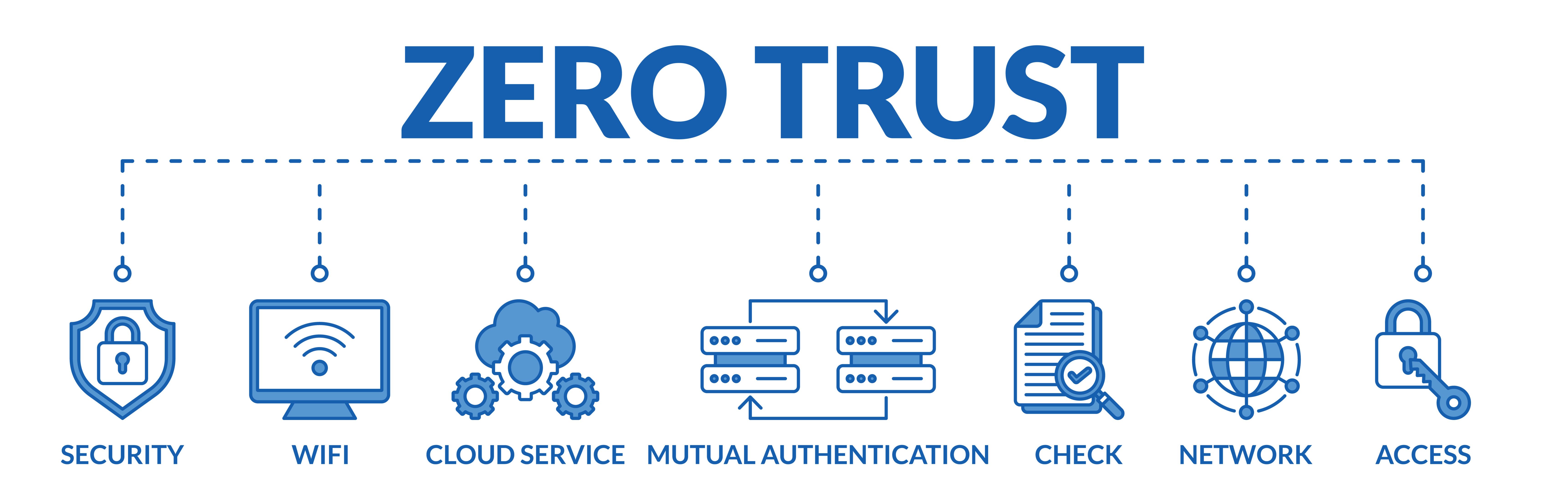
Zero Trust Networking isn't a product. It's a design model, built on a simple core idea: never trust implicitly, always verify explicitly, and grant only the minimum access required.
In practice, every service-to-service call must be authenticated. A backend API shouldn't accept traffic simply because it arrived from a private subnet: it should know which service is calling, validate that identity, confirm the caller is permitted to perform the requested action, and log the decision.
This is where mTLS, service identity, short-lived credentials, workload identity, policy engines, API gateways, service meshes, secrets management, and fine-grained IAM all earn their place: together, they convert a flat network into a controlled communication graph.
Zero Trust also reduces over-reliance on VPNs. A VPN confirms someone entered the network; it says nothing about whether every subsequent action they take is valid. Zero Trust pushes verification closer to the resource itself, rather than relying on a single perimeter check.
A useful mental model: don't protect only the castle gate; protect every room, every vault, every passage. Every request carries identity, every system verifies intent, and every permission stays narrow. Every failure stays visible.
When a Flat Trust Model Became a Full Compromise
A team running microservices on Kubernetes protected the cluster with private networking and assumed internal traffic was inherently safe. One low-risk service had an exposed debug endpoint and an over-permissive service account. Once compromised, the attacker called internal APIs, read configuration, accessed secrets, and reached customer data stores, because internal services trusted cluster traffic by default. The real failure wasn't the exposed endpoint; it was the flat trust model underneath it. With mTLS, workload identity, scoped permissions, and per-service authorisation in place, the same compromised service would have had a dramatically smaller blast radius.
Zero Trust Networking is first-principles security for distributed systems. It accepts that networks are porous, credentials leak, services get compromised, and people make mistakes, and designs for verification, containment, and visibility instead of assuming safety by default.
This is where Cloud & DevOps and AI-Driven Operations come together in Tarento's engagements: building identity and containment into the platform from day one, not retrofitting it after the first lateral-movement incident.
How to Evaluate These Five Foundations as a Leadership Team
These five decisions aren't isolated: they compound.
The API Gateway sets the external contract and absorbs internal change, which is what makes everything behind it safe to evolve. Observability determines whether that evolution can be diagnosed quickly when something goes wrong. Chaos Engineering proves, rather than assumes, that the failure paths observability is meant to catch actually behave the way the architecture intends. Infrastructure as Code determines whether the environment those failure paths run in is reproducible and trustworthy in the first place. And Zero Trust Networking decides how far damage spreads when, despite all of the above, something is still compromised.
Treated individually, each is a technical decision made by whichever team got there first. Treated together, as a platform strategy reviewed at leadership level, they're what separates systems that degrade gracefully under pressure from systems that fail in ways nobody predicted.
Frequently Asked Questions About Infrastructure & Cloud Foundations
1. Do we need a service mesh if we already have a good API Gateway? No. They solve different problems. An API Gateway manages north-south traffic entering the system from outside. A service mesh manages east-west traffic between services inside it. Many mature platforms use both.
2. Which observability signal should we invest in first if budget is limited? Start with metrics for detection and alerting: they're the cheapest to run and give the fastest signal that something is wrong. Add traces next if you're running microservices, since that's where 'why is it slow' becomes genuinely hard to answer from logs alone.
3. Is Chaos Engineering safe to run in production? Yes, but only with proper guardrails: blast-radius limits, monitoring, and a tested rollback plan. Most teams start in lower environments and gradually graduate to production experiments once the team trusts the observability and rollback mechanisms underlying the experiment.
4. Should all our infrastructure be declarative? Mostly, but not entirely. Declarative IaC is the right default for long-lived infrastructure because it's reviewable, auditable, and reproducible. Imperative scripts still make sense for one-off migrations, operational runbooks, and workflows where sequence genuinely matters more than end state.
5. Where should a Zero Trust rollout start if we're migrating from a flat internal network? Start with identity, not tooling. Move from IP-based or network-based trust to workload identity and mTLS for your highest-risk service-to-service calls first, typically anything touching customer data, secrets, or payment flows, before expanding the model cluster-wide.
Ready to build infrastructure that holds under real-world pressure?
Whether it's a gateway that's grown organically, observability that doesn't connect the dots, resilience that's never been tested, infrastructure that drifts between environments, or a network that trusts too much by default: these are exactly the foundations Tarento's engineering practices are built to strengthen.


Why 40–60% of Integration Engineering Time Is Lost to Firefighting