Data Warehouse Modernisation and BI Consolidation for an Australian Engineering Conglomerate

At a glance
Tarento delivered end-to-end Application Lifecycle Management (ALM) services for an Australian engineering group operating across eight business units in the electrical, IT, semiconductor, and power utility industries. The engagement covered L1 and L2 support for existing SQL Server data warehouses and Power BI reports, ETL pipeline management, and the consolidation of SFDC, ERP, and third-party systems into a centralised data warehouse. Four new Power BI dashboards were implemented, including an enhanced Sales Dashboard, giving leadership a unified view across the group for the first time.
About the project: unified data intelligence across eight engineering businesses
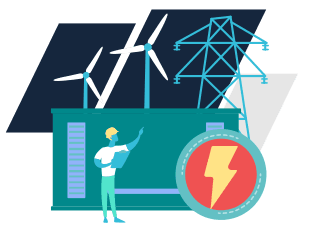
The client is an Australian engineering solutions provider operating across the electrical, information technology, semiconductor, and power utility industries. With a portfolio of eight companies — each an industry leader in its segment — the group supplies quality components, consumables, tools, and testing and measurement services certified to Australian standards.
At that scale, each business unit has its own source systems, reporting cadence, and data quality constraints. Decisions that should have been informed by group-wide intelligence were instead being made on fragmented, siloed outputs. The group needed a managed data services partner who could stabilise what existed and extend it purposefully.
The challenge: managing a fragmented data estate across a multi-business group
The engineering group's data environment had grown organically across eight businesses. Consolidating and managing it introduced constraints that shaped the entire engagement:
- Existing data warehouses ran on niche toolsets with limited internal knowledge transfer, leaving the group exposed to single points of failure in support and maintenance.
- ETL pipelines had to load data accurately and on schedule across multiple source systems — delays or failures had direct downstream impact on reporting.
- New dashboards were needed to support faster, evidence-based decision making at the group level, requiring integration of SFDC, ERP, and third-party systems that had never previously been connected in a single view.
Why Tarento: BI and data engineering depth across SAP and Microsoft stacks
The engineering group needed a partner with both managed services discipline and hands-on capability across the specific tools in the estate — SQL Server, Power BI, and a heterogeneous source landscape that included Salesforce, ERPs, and third-party platforms.
Tarento brought a team of Data Engineers, Data Analysts, and Data Architects with direct experience across SAP and Microsoft enterprise stacks, structured ALM delivery, and the ability to run support and new development in parallel without one compromising the other.
What Tarento delivered
Stabilised the existing data estate:
- L1 and L2 support across two SQL Server databases and five Power BI reports
- ETL pipeline monitoring, batch failure resolution, and timely data loading across all source systems
- Data quality management through direct interaction with source systems and business users
- Problem management — root cause identification and permanent fixes, not just reactive resolution
- User access management and periodic documentation updates
Built new reporting and integration capability:
- Migrated the existing VA system to Power BI, retiring a legacy reporting environment
- Integrated SFDC, ERP systems, and third-party platforms into a centralised data warehouse — creating a single source of truth across the group for the first time
- Implemented four new Power BI dashboards for enhanced group-level decision making
- Enhanced the Sales Dashboard with cross-system data, giving commercial leadership consolidated pipeline and performance visibility
Technology stack: SQL Server, Power BI, SFDC, and ERP integration
The engagement ran on a Microsoft-centric stack aligned to the client's existing environment: SQL Server for the data warehouse layer, Power BI for reporting and dashboards, and custom ETL pipelines for data loading and transformation. Source system integration covered Salesforce (SFDC), multiple ERP platforms, and third-party data providers — all consolidated into a single centralised warehouse.
Tarento's approach preserved continuity with the existing estate while introducing the integrations and tooling needed to extend it. No disruptive platform change was required; the value came from disciplined management and targeted build.
Impact: a managed, integrated, and extensible data platform
The engagement delivered two outcomes simultaneously — sustained operational continuity for the existing data estate, and a materially expanded reporting capability for the group.
The centralised data warehouse connected data sources that had previously operated in isolation. Group leadership gained consolidated visibility across sales, operations, and business performance through four new Power BI dashboards where fragmented, siloed reporting had existed before.
Batch failures and data quality issues — previously unresolved at root cause — were systematically addressed through structured problem management, reducing recurring support incidents and improving data reliability across the estate.
The migration from the VA system to Power BI retired a legacy environment and brought reporting into a single, maintainable platform — reducing the specialist dependency that had made the estate difficult to support and extend.
Why this case study matters
Data warehouse modernisation for multi-entity groups is rarely a single-technology problem. The challenge is almost always organisational and structural: multiple source systems that were never designed to talk to each other, support obligations that compete with development capacity, and decision makers who need consolidated intelligence from a landscape that has never provided it.
Tarento's approach on this engagement — running managed support and new development in parallel, integrating heterogeneous source systems into a central warehouse, and delivering dashboards that reflect how the business is actually organised — is what Tarento brings to data and analytics programmes across engineering, manufacturing, and industrial sectors.
Explore Tarento's Data & Analytics services and ERP & Application Management practice.
We can help you transform your business.
By submitting this form, you agree to Tarento processing your data as described in our Privacy Policy.

Open Source E-learning Platform for Maternity Healthcare